Book Categories:

Guides
Past Life Tarot Spread: 3 Layouts and How to Read Them

Share:
Book Categories:


A past life tarot spread is a layout of cards used to explore the idea of a previous life as a set of symbols: a role you played, a lesson you carried and something left unfinished. It cannot prove who you were, but it can give you a clear story to reflect on. This guide covers three spreads position by position, how to read the cards, and what a written past life reading can and cannot do.
I’m Meriem, and I prepare every PuraTarot reading by hand. I will be plain about the limits of past life tarot cards, because that honesty is what makes the reflection useful.
A past life tarot spread gives each card position a question about a previous life: who you were, what you learned, what you left undone. Past life card spreads are popular because they turn a vague feeling (“I’ve been here before”) into something you can look at and write about.
Tarot works with symbols, not records. A past life tarot reading can show you a theme (solitude, service, loss, leadership), a pattern that repeats in your current life, and a lesson you might be ready to close. Whether that story is a literal earlier life or a picture your mind builds is a matter of belief; either way, you get a fresh angle on something you already feel.
If you have searched for how to do a past life reading with tarot cards, here is the whole process. It takes about twenty minutes with any standard 78-card deck.
Start with the 3-card layout if you are new. Move to the 5-card karmic tarot spread for more detail, and use the 7-card past life relationship tarot spread when your question is about one person.
Lay three cards in a row, left to right. It answers the simplest version of “who was I in my past life?” without overwhelming you.
Lay one card in the center, then two on each side. This karmic tarot spread adds a “trigger” position, which is where most of the practical insight lives.
Use this when someone feels familiar within minutes of meeting them. Lay positions 1 and 4 in a center column, 2 and 3 above them, and 5, 6 and 7 in a row below.
One honest note: this spread describes your side of the connection. It cannot read the other person’s mind or promise the relationship will go anywhere. If your question is really about the relationship itself, see my love tarot spread guide.
Past life tarot cards are the same deck as any other reading. What changes is the lens, and this is the one I use.
A Major Arcana card in a “who you were” or “core theme” position points to a strong identity. Ten common ones look like this in past life work.
| Card | Past life theme |
|---|---|
| The Hierophant | A life shaped by faith, tradition or teaching: a monk, priest, scholar or keeper of the rules. |
| The Emperor | Authority and duty: a leader, builder or protector responsible for others. |
| The Hermit | A solitary seeker: a healer or scholar who found wisdom apart from the crowd. |
| Death | A life that ended abruptly or changed completely; a transformation still being processed. Never a prediction. |
| Temperance | A mediator, healer or craftsperson: a life spent blending, balancing or going between two sides. |
| Judgement | A reckoning: being called to account, judging others, or answering a calling late in life. |
| The Sun | A visible, celebrated or joyful life; a gift of confidence and warmth carried forward. |
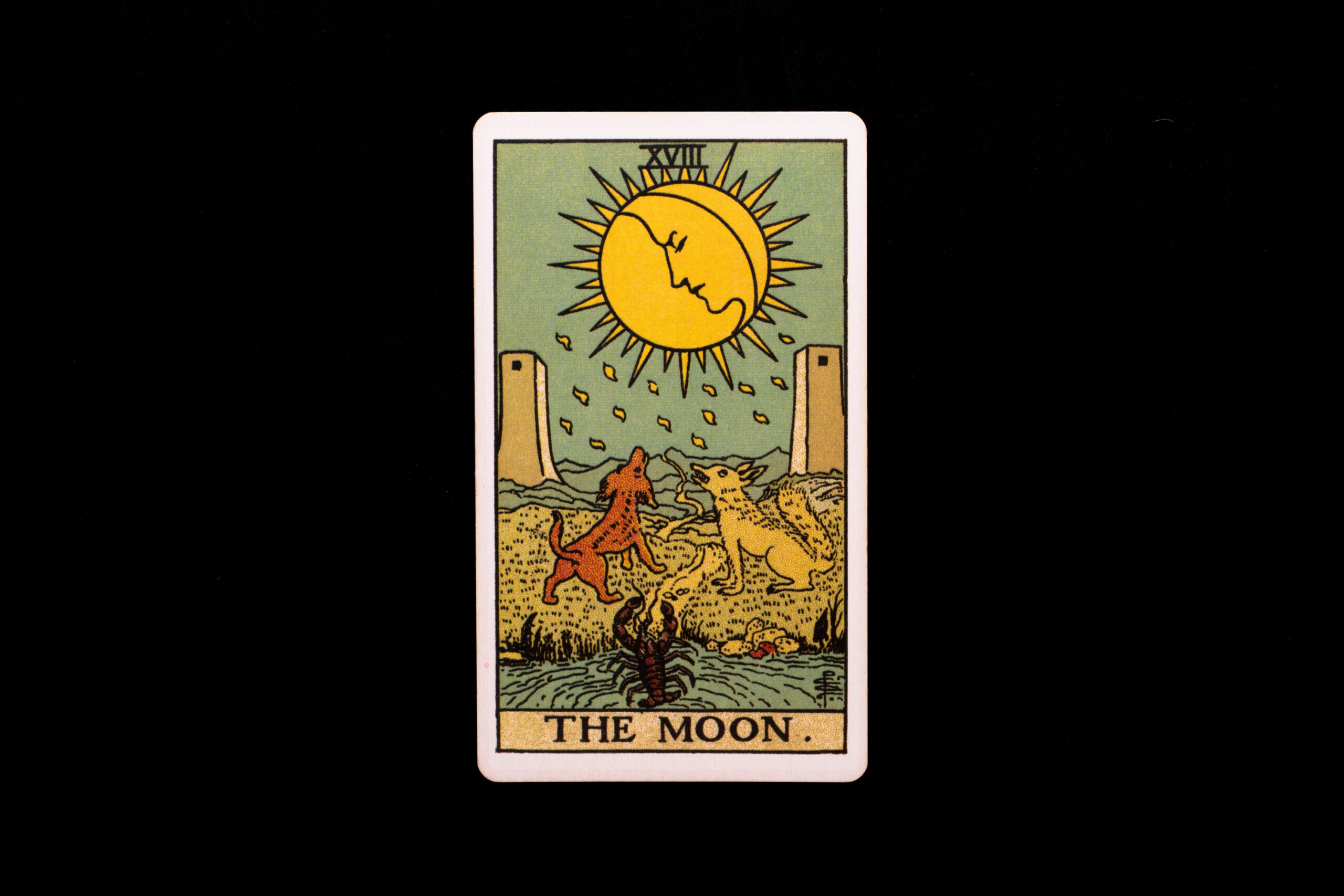
| The Moon | Hidden memory, secrets, fear and intuition: a life lived in shadow, or dreams that feel like memories. |
| The Tower | Sudden loss or upheaval: a life overturned by disaster, scandal or war; a fear of sudden change today. |
| The Star | Hope after hardship: a guide, nurse or healer; a gift of faith that survived a hard life. |
Court cards usually represent people. A Page suggests someone young or learning, a Knight someone on a mission, a Queen someone who nurtured or ruled quietly, and a King someone with open authority. In a relationship spread, the suit often shows how that person related to you.
In past life work I read reversals as unfinished business: something started but never completed, or a lesson learned the hard way. A reversal in the “what to release” position is often the most useful card.
People often ask, “How do I know if I’ve lived a past life?” There is no test for it. These are the signs of a past life people most often describe when they order a reading, presented as experiences, not proof; each has ordinary explanations too.
If one of these brought you here, write it down; it is the detail that makes a spread specific instead of generic.
Past life regression and a past life tarot reading are often confused, but they are different practices. Regression is a hypnosis-based session guided by a practitioner, while a tarot reading is a symbolic reflection using cards.
| Past life regression | Past life tarot reading | |
|---|---|---|
| Method | Guided relaxation or hypnosis; you describe images that surface | Cards drawn in a spread and read as symbols |
| Who does it | A hypnotherapist or regression practitioner, in person or by video | A tarot reader, or you at home |
| Time | Typically a 1–3 hour session | 20 minutes at home; a written reading arrives the same hour or same day |
| Cost range | Varies by practitioner; often roughly $100 to several hundred dollars per session | Free at home; a PuraTarot past life reading is $9.99–$15.99 |
| What you get | A first-person experience, sometimes recorded | A written interpretation you can reread, with a photo of the spread |
| Limits | Memories under hypnosis are not verified history; results depend on suggestibility | Symbolic only; cannot confirm facts, treat trauma or predict outcomes |
Neither one proves reincarnation. If you are comfortable with hypnosis and want an immersive experience, regression may appeal to you; if you want a low-cost reflection you can keep, a written reading is simpler.
This is a made-up example to show how I interpret a 3-card spread; “Sam” is not a real client. Sam’s note said: “I’ve always been uneasy in crowds and drawn to quiet, disciplined work. I’d like to understand where that comes from.”
As a story, these cards describe solitude that once kept you safe and now keeps you separate. The Hermit and the Five of Pentacles suggest “quiet and disciplined” was a strength born outside the circle. The reversed Eight of Swords says the walls are yours to lower, a little at a time.
In the written PDF I would connect each card to Sam’s context and end with one reflection question. I would not say where or when this life took place, because the cards cannot tell and I will not guess.
On the product page, you type your details into the “Your details for this reading” box before you add the reading to your cart. This is what makes the reading personal.
Then choose Same Hour or Same Day and check out. I shuffle, lay out the spread, photograph it, write the interpretation card by card and as a whole, and email the PDF to your checkout address. Read more in how personalized tarot readings by email work, or check the acceptable questions page if unsure what to ask.
Pick a quiet space and set one intention, such as a fear or a person you want to understand. Shuffle with that question in mind, lay out three, five or seven cards in the positions above, and describe the imagery before you check any meanings. Journal your impressions and revisit them in a week.
Tarot can offer a symbolic story about a past life: a role, a lesson, a gift and something unfinished. It cannot verify names, dates or historical facts, and it cannot tell you how you died. Treat the reading as a mirror for patterns you already feel, not as a record of what happened.
There is no reliable test, only experiences people report: déjà vu with places, unexplained fears, talents with no origin, recurring dreams and instant familiarity with certain people. These are not proof, and each has everyday explanations too. If one keeps returning, a past life tarot spread is a gentle way to explore it.
For past life work, the best spread is the one that matches your question. The 3-card spread suits a first attempt or a single pattern, the 5-card past life and karma spread shows how a theme plays out today, and the 7-card relationship spread is for a specific person who feels familiar.
Not literally, because the cards will not produce a name, a country or a century. What they can do is describe an archetype (a healer, a leader, an outsider, a teacher) and the flavor of that life through the suits. Most people find the archetype more useful anyway, because it explains a pattern they are living with now.
No. Past life regression is a hypnosis-based session led by a practitioner, usually lasting one to three hours, in which you describe images that surface. A past life tarot reading uses cards and gives you a written, symbolic interpretation you can keep; it costs far less and does not involve hypnosis.
If you would rather have a reader lay the spread and write it up, these are the past life readings I offer. Each is a written PDF with a photo of your cards, delivered the same hour (subject to my availability) or the same day.
You can browse everything in the past life reflection category. A past life reading online is only as good as the detail you give it, so write down the pattern that made you curious and I will take it from there.
Readings are for adults, for personal clarity; they are not medical, mental-health, legal, financial or professional advice, and no outcome is guaranteed. See the full disclaimer.
Your personal reading
Send me your question and the details that matter. I read your energy first and the cards second, then write your reading as a long, personal letter and deliver it to your inbox as a beautifully designed PDF, Same Hour or Same Day.
From $13.99 · Delivered by email, 24/7 · Private and written just for you